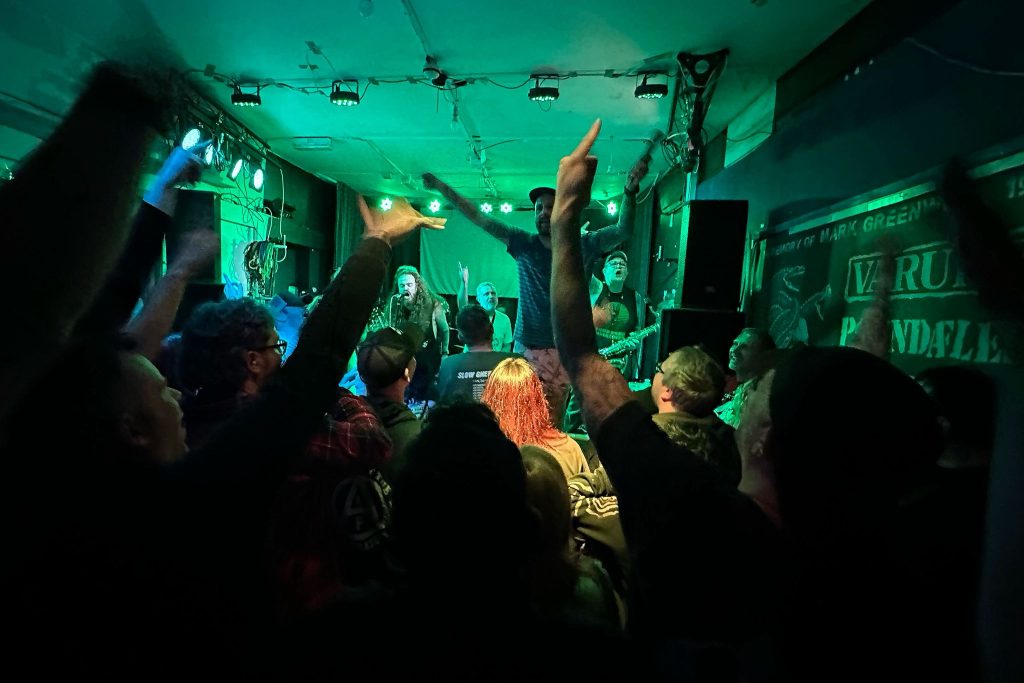
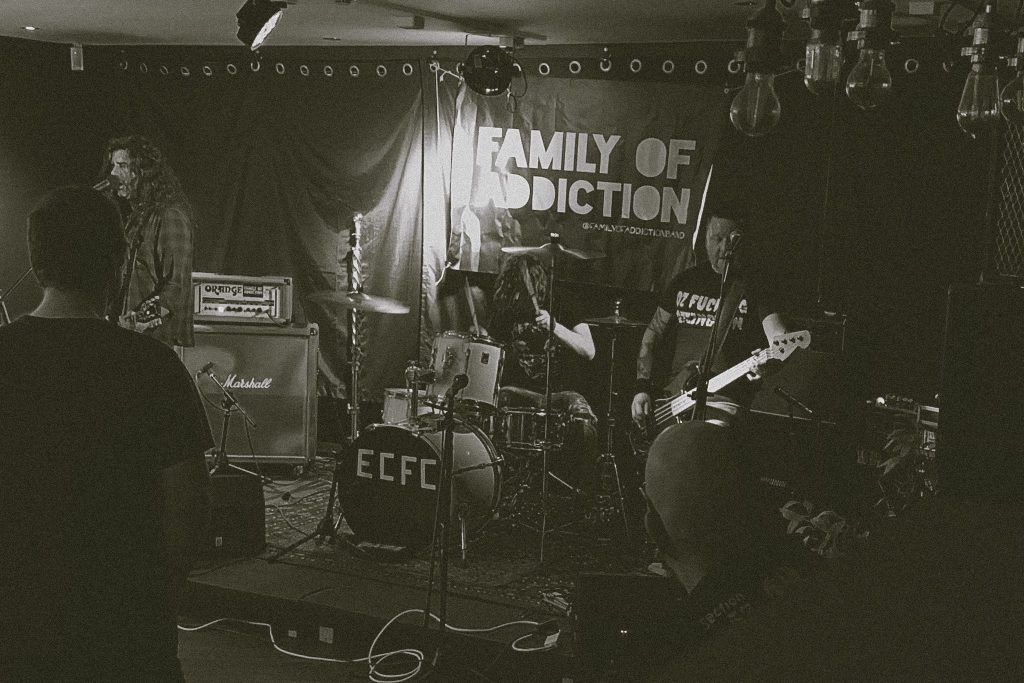
There are loud bands, and then there are bands like Family of Addiction. The kind that don’t just play a…
By K Futur LOCALWhen people talk about Skrillex, they usually talk about the drops. The hair-raising, metallic, rib-crushing detonations that defined the early 2010s and pushed dubstep from a niche club sound into a global youth-culture eruption. But the real story – the one that explains why Skrillex became such a generational lightning rod – starts somewhere far stranger, deep in the experimental underbelly of Warp Records. It starts with Aphex Twin.
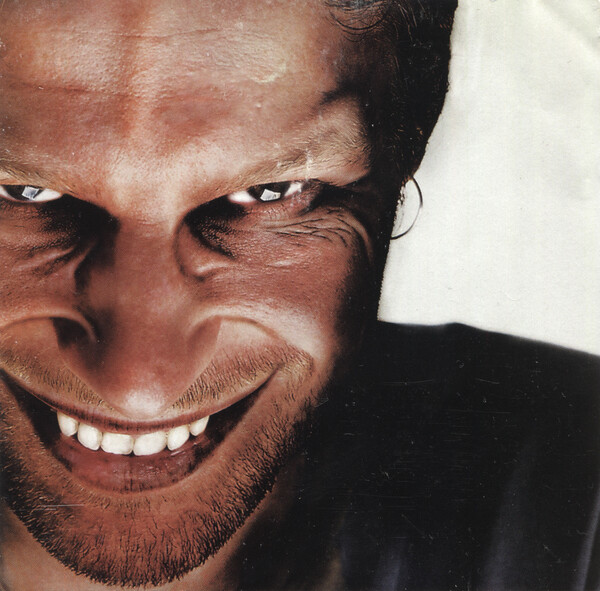
To understand how Sonny Moore became Skrillex, the world’s most unlikely EDM anti-hero, you have to look backwards: not to the Beatport charts, not to the festival mainstages, but to a gangly kid in Los Angeles discovering Aphex Twin’s Come to Daddy around age 11 or 12, courtesy of Korn’s guitarist Munky. Before the clubs, before the screams, before the robot basslines, there was Richard D. James – the enigmatic, mischievous mastermind behind Aphex Twin – quietly rewriting the rulebook on what electronic music could be.
Background: Two Outsiders Who Became Blueprint Writers
Aphex Twin emerged in the early 1990s as the crown jewel of Warp Records, pioneering what would become known as IDM: music that fused breakbeats, ambient drone, chaotic drum programming and a sense of playful hostility that pushed far beyond traditional club formulas. He was – and remains – electronic music’s trickster god: elusive, technically untouchable, and utterly indifferent to mainstream trends.
Skrillex, meanwhile, came from a completely different world. Raised on goth, industrial and alternative rock, he was an L.A. punk-urchin who exploded into view as the teenage frontman of screamo outfit From First to Last. When throat issues pushed him out of the band, Moore pivoted into electronic music, first experimenting under his given name with Trent Reznor-tinged electro-pop, before diving headfirst into the rising dubstep scene. He was a cultural outsider twice over – too emo for the ravers, too rave for the emos – which ended up making him the perfect bridge between youth cultures.
The Aphex Twin Epiphany
Skrillex didn’t merely like Aphex Twin. He studied him. He worshipped him. He dissected him. And crucially, he understood him.
His obsession with Flim – which he once described as his favourite song of all time – tells you everything. Flim has no drop, no structure that resembles anything Skrillex would later become known for. It is delicate, intricate, emotionally ambiguous, and powered by breakbeats so precise they feel like nanotechnology. To Skrillex, it wasn’t confusing at all. It was revelation.
This was where he learned that electronic music wasn’t bound by form. It wasn’t required to build predictably. It didn’t have to explode on command. It could be playful, fragile, violent, melodic, improvisational or completely absurd. Aphex Twin’s ethos – break the rules, then break the tools used to enforce them – became the unspoken DNA of Skrillex’s sound design.
Warp Records, IDM and the Blueprint for Sonic Chaos
Skrillex’s fascination with Warp Records went beyond Aphex Twin. He consumed Squarepusher. He absorbed the hyper-detailed programming, the provocation, the constant refusal to sit still. So when dubstep arrived in Los Angeles via local champions like 12th Planet and Dr. P, Skrillex already had the necessary instincts: push harder, take weirder risks, avoid the obvious, and make the machines scream.
This is the secret that most critics missed. Skrillex’s so-called “brostep” wasn’t some crude Americanisation of UK dubstep. It was IDM weaponised for stadiums. It was Aphex Twin’s chaos theory fed through distortion pedals and emotional catharsis.

Mutual Recognition: Admiration, Awkwardness and a Tank in Wales
Despite their wildly different trajectories, the two eventually collided – albeit somewhat awkwardly.
In a 2014 Groove magazine Q&A, Aphex Twin casually mentioned that he had only heard Skrillex because his children played the tracks at home. His verdict? “Pretty poppy, isn’t it? Too poppy for me.” But crucially, he acknowledged Skrillex’s strong grasp of technology – high praise from someone whose production techniques remain mythical.
Skrillex, ever the earnest fan, used the interview to ask about Aphex Twin’s rumoured military tank.
“Do you still own your tank and if so, can I come visit you, try it out and drive it?”
The reply – wonderfully deadpan – confirmed the tank existed, still worked, and sat at his sister’s house in Wales. It is perhaps the most Aphex Twin answer imaginable.
Their first in-person encounter was less charming. At Lowlands Festival, Aphex Twin seemed dismissive, leaving Skrillex crushed. Later, he learned it was due to pre-show stress after a fight with his manager. Aphex Twin apologised. The generational bridge was restored.
The Missing Link Between Generations
What makes Skrillex so culturally significant – and why his link to Aphex Twin matters – is that he became a hinge between eras. Skrillex connected the gothic shock aesthetics of Marilyn Manson, the industrial grit of Nine Inch Nails, the angst of emo, the chaos of screamo, the innovation of IDM, and the low-end physics of dubstep into something that made perfect sense to a new generation.
He wasn’t just a producer. He was a translator.
Where Aphex Twin operated in the shadows, influencing the fringe, Skrillex brought fringe ideas to the centre. He smuggled experimental electronic concepts into the playlists of teenagers who had never heard of Warp Records. He turned IDM’s sharp edges into pop culture shrapnel. He opened the door for a generation of producers who suddenly realised it was acceptable – even powerful – to be both maximalist and meticulous, both underground-minded and globally ambitious.
Aphex Twin Built the Laboratory. Skrillex Turned It Into a Factory.
At its core, this isn’t a story about influence. It’s a story about transmission.
Aphex Twin gave Skrillex the blueprint for fearlessness in sound design: the freedom to distort, to dismantle, to subvert. Skrillex, in turn, became the vessel through which those ideas reached millions. The underground created the tools; Skrillex created the moment.
Electronic music has always moved in cycles, but this particular lineage – Aphex Twin to Skrillex – marks one of the most dramatic cultural leaps the genre has ever seen.
One rewired machines.
The other rewired the masses.
And modern music still hasn’t caught up.