Emo is back in Derby. Not the polished, radio-friendly version that dominated the mid-2000s, but the raw, twinkly, lo-fi, emotionally…
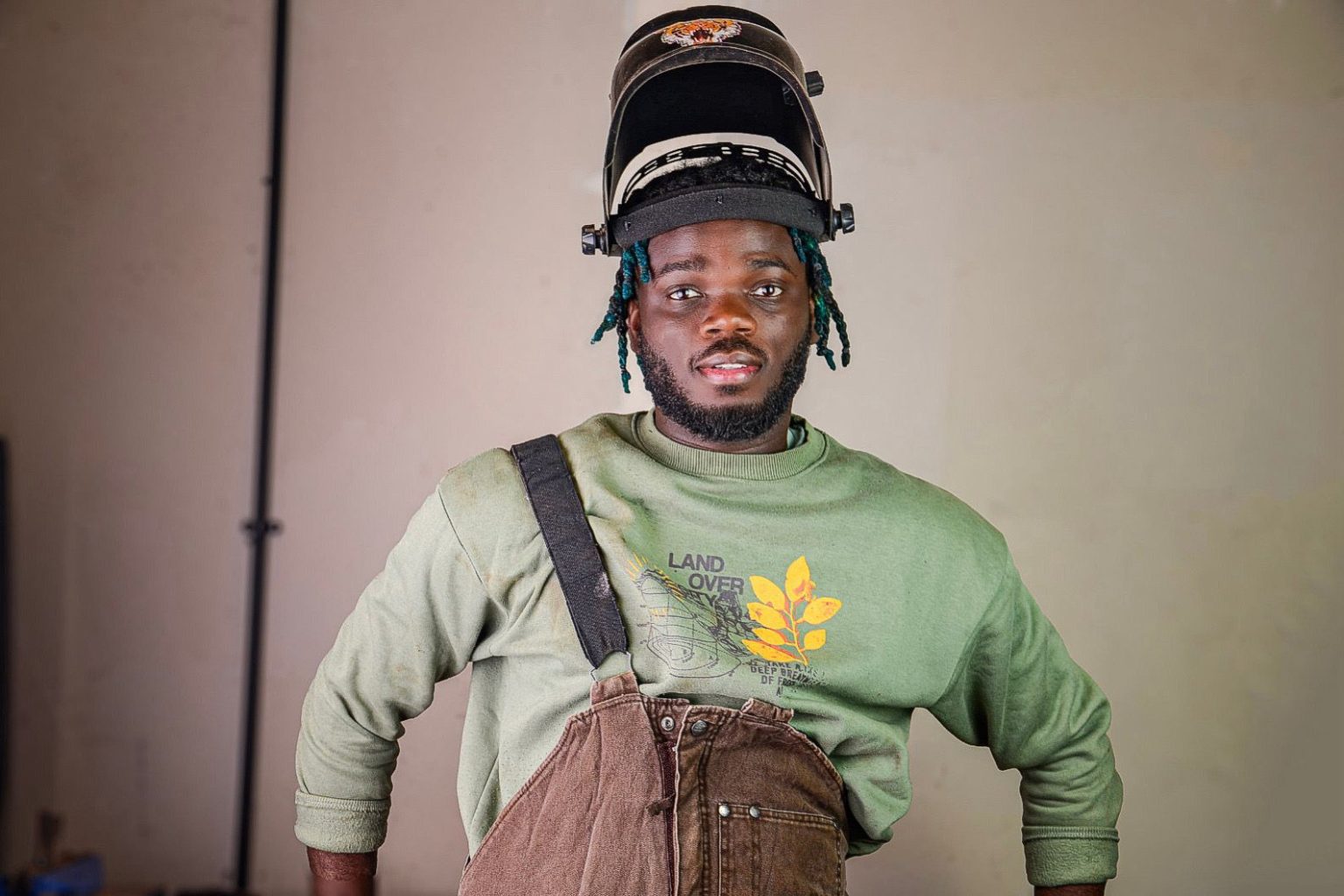
By K Futur LOCALIn a city shaped by steel, railways and relentless industrial evolution, Ayoola Ayodeji Kingsley is quietly continuing that legacy in a way few others are. Working from Derby, his sculptures are not just objects of form and structure but deeply embedded narratives, forged from the remnants of industry and reimagined into something entirely new.
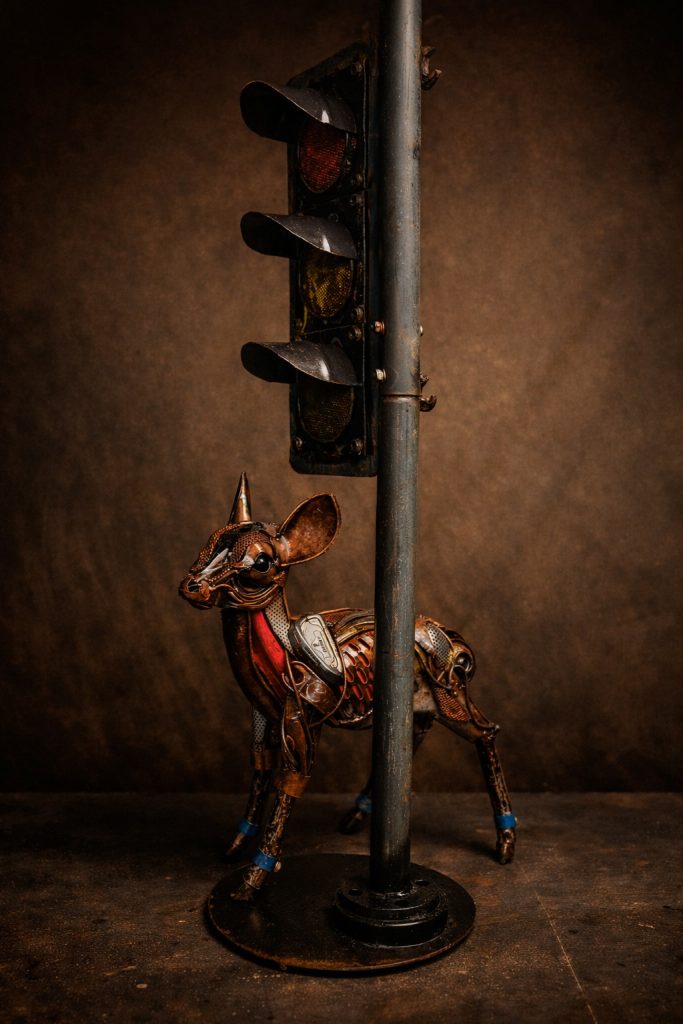
Ayoola’s practice sits at the intersection of material, memory and place. His work, often constructed from reclaimed scrap metal sourced locally, reflects both the history of the region and the lived experiences that surround it. In a city where engineering once defined identity, Ayoola is reshaping that same material language into something expressive, reflective and alive.
“I am currently based in Derby, a city with a deep industrial heritage rooted in engineering, railways, and manufacturing,” he explains. “Much of my practice involves working with discarded materials, particularly scrap metal sourced from local scrapyards and workshops around the city.”
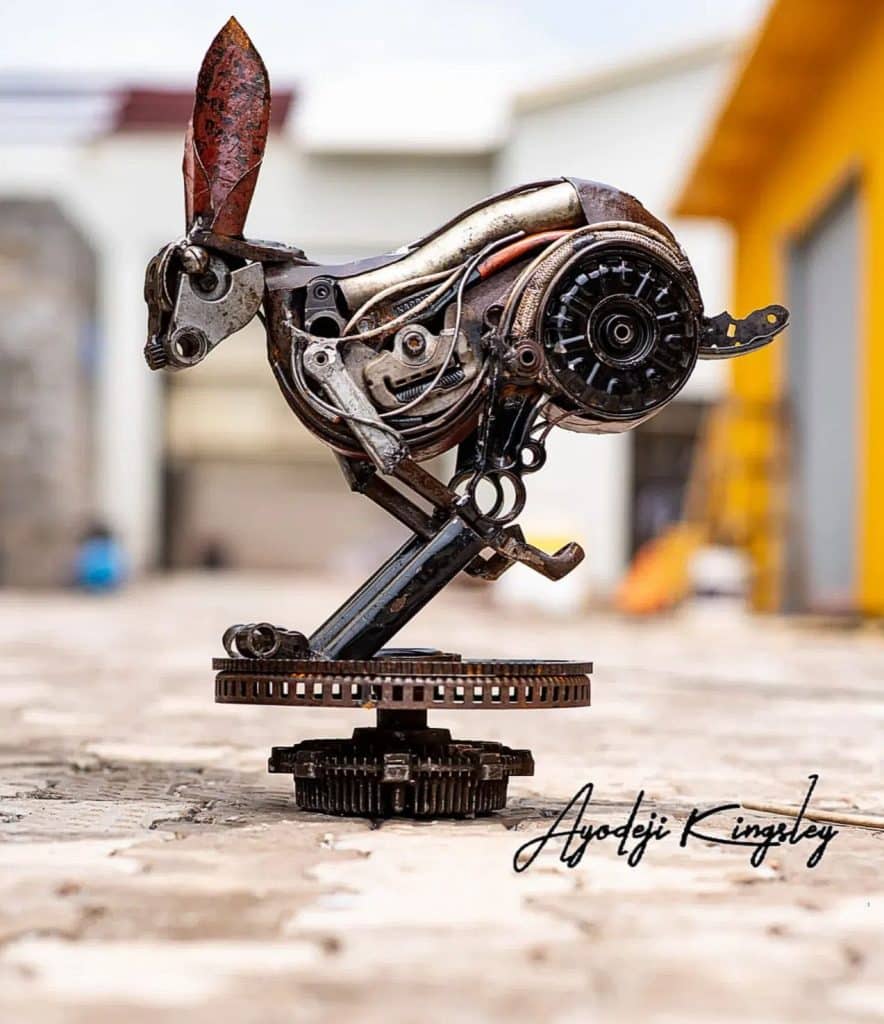
What makes his work particularly compelling is not just the transformation of material, but the continuation of its story. These fragments of steel are not blank canvases. They carry weight, history and traces of human interaction. Ayoola doesn’t erase that. He builds on it.
“These materials carry traces of the industries and communities that produced and used them,” he says. “When I incorporate them into my work, I am not only transforming the material physically but also continuing the narrative embedded within it.”
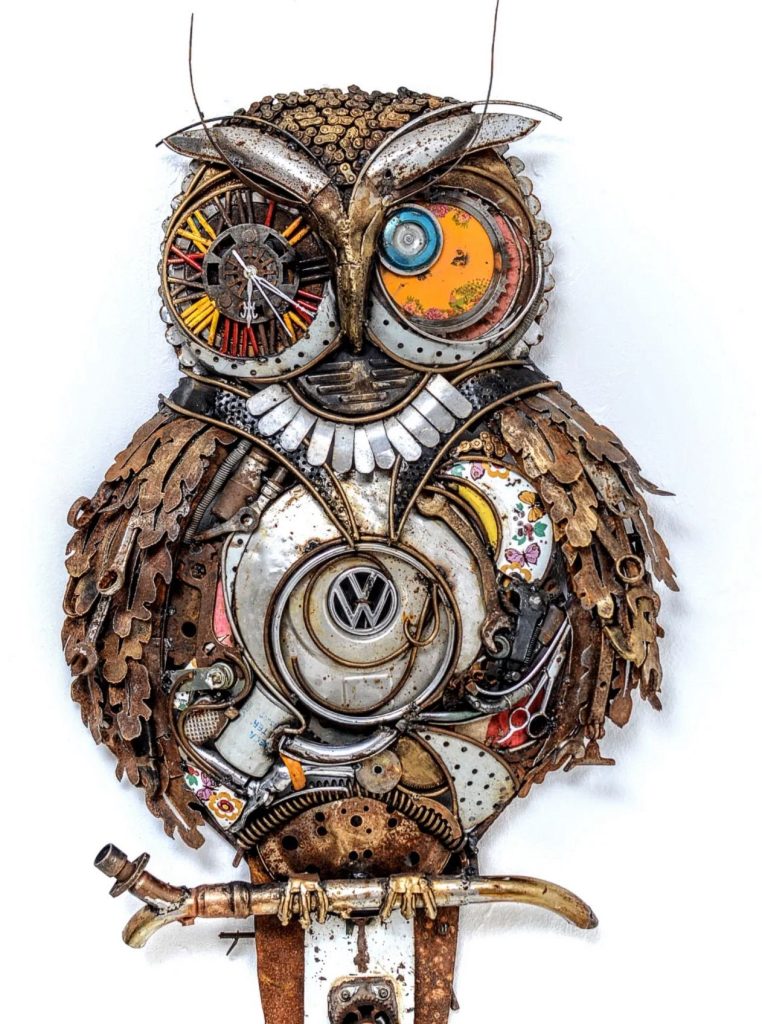
This idea of narrative is central to everything he creates. Each sculpture becomes a meeting point between past and present, between object and meaning. It is a process shaped not only by his current environment in Derby but also by his upbringing in Nigeria, where resourcefulness and creativity were part of everyday life.
“Growing up in Nigeria had a profound influence on the way I approach my work,” he explains. “I was surrounded by a culture of ingenuity and resourcefulness, where people often had to improvise with the materials available to them.”
That foundation is still evident today. There is a natural instinct in his work to repurpose, to reimagine, and to extract potential from what others might overlook. Sustainability is not a trend within his practice. It is embedded in its DNA.
“I witnessed everyday creativity in the way discarded items were repurposed out of necessity… Sustainability was not presented as a concept or movement, it was simply a natural part of daily life.”
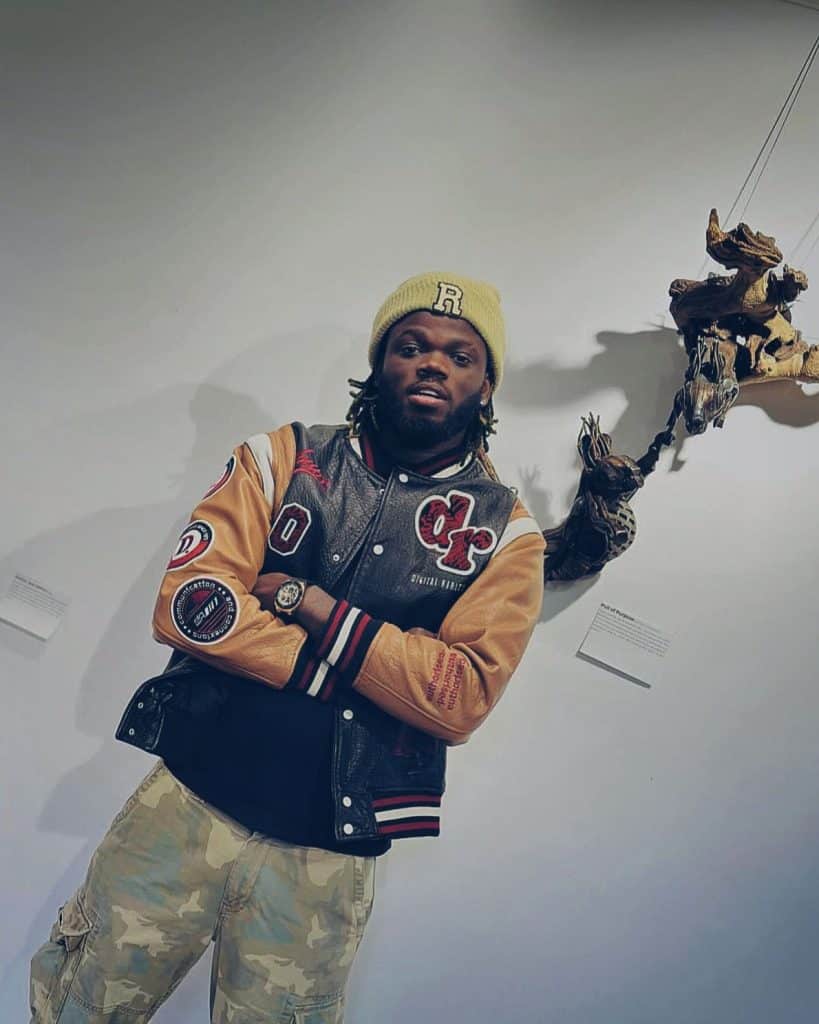
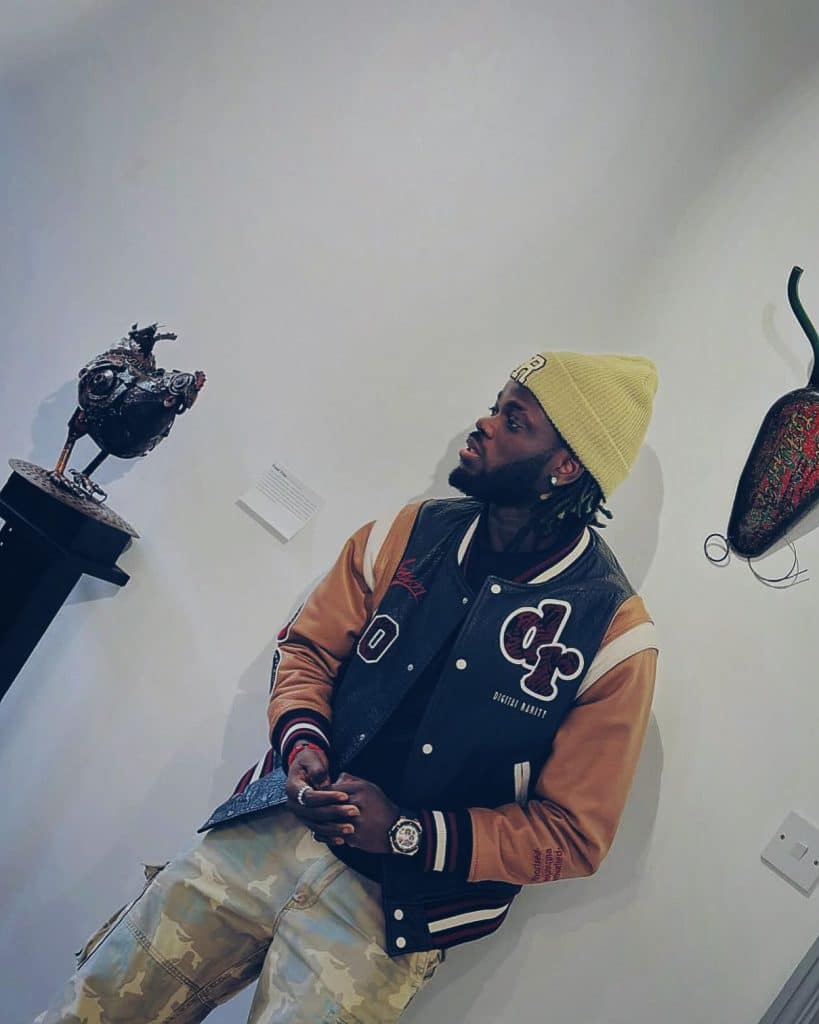
Ayoola did not begin his creative journey as a sculptor. His path moved through illustration, graphic art, and textile-based experimentation before eventually arriving at metal. But when it clicked, it clicked fully.
“When I eventually began working seriously with metal, something immediately resonated,” he says. “The material demanded patience and discipline, but it also offered an incredible sense of freedom.”
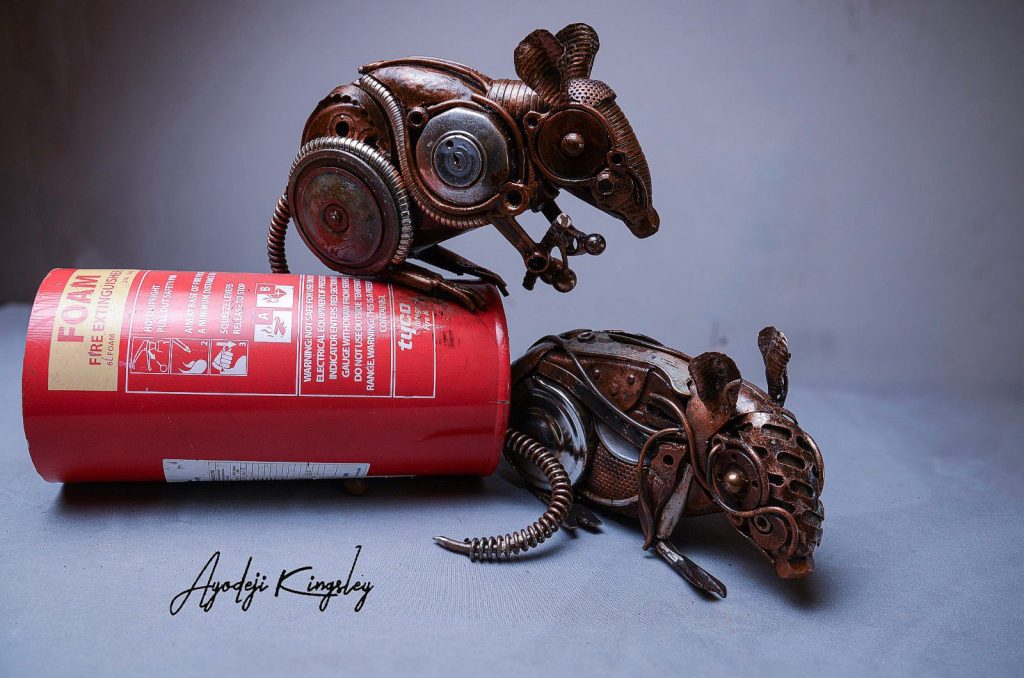
That duality defines his work. Steel is rigid, heavy and unforgiving, yet under his hands it becomes fluid, expressive and often surprisingly delicate. His sculptures range from animals to human forms and abstract structures, all unified by a sense of movement and intention.
Working with reclaimed materials introduces an added layer of complexity. It is not just about building, but about seeing.
“Working with reclaimed materials often feels like solving a puzzle,” he explains. “It requires looking beyond what most people see as waste and imagining how different fragments can come together to form something meaningful.”
This mindset extends beyond the physical act of making. It is a way of thinking. A way of approaching both material and idea.
One of the defining moments in Ayoola’s journey came when his work stepped outside the studio and into the public realm.
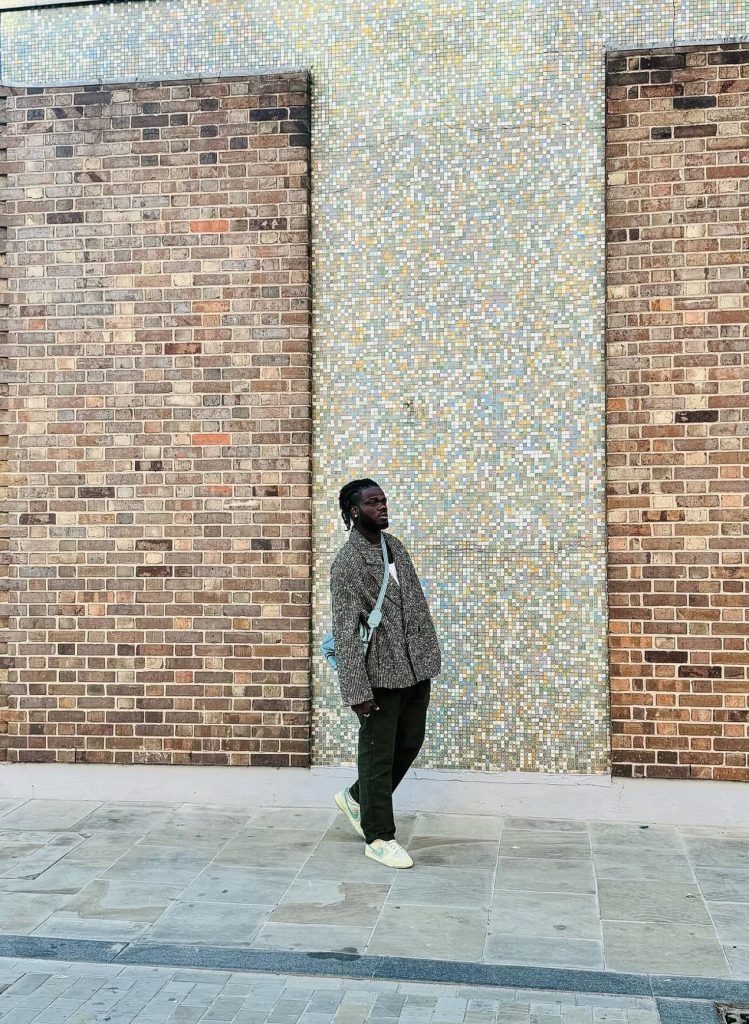
“Seeing one of my sculptures installed in a public space for the first time was a powerful experience,” he recalls. “Creating a sculpture in the workshop is often a very personal process, but once it is placed in a public setting it takes on a completely new life.”
That shift from private creation to public interaction is where his work truly opens up. People bring their own interpretations, their own emotional responses, their own stories. The sculpture becomes less about the artist and more about shared experience.
“It had become part of a shared space and part of a wider conversation,” he says. “Seeing people engage with it reaffirmed my belief that art can quietly connect with people.”
Despite the poetic nature of the finished work, the process itself is anything but gentle. Metal sculpture is physically demanding, requiring endurance as much as creativity.
“It’s heavy lifting, grinding, cutting, welding, and long hours in the studio,” he says. “Some days you’re exhausted before you’ve even really started the creative part of the process.”
Beyond the physical toll, there is also the logistical challenge of sourcing materials, transporting heavy pieces and managing the realities of working with large-scale metal. It is a discipline that demands resilience.
“Being a successful artist in this field isn’t just about creativity; it’s about resilience and showing up again and again,” he adds.
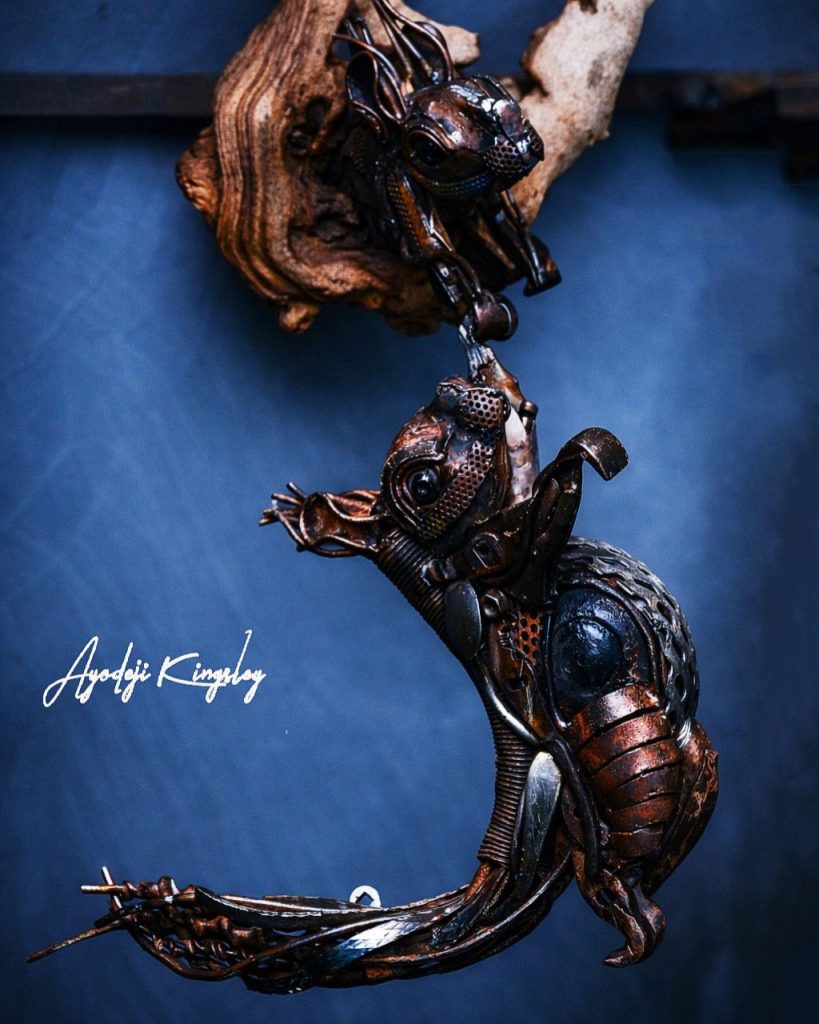
Inspiration, for Ayoola, often begins with the material itself. A curve in a piece of steel, a texture, a structural detail, these become starting points. The material speaks, and he listens.
“A particular piece of metal can already suggest a possible direction or form,” he explains. “In that sense the material becomes an active collaborator.”
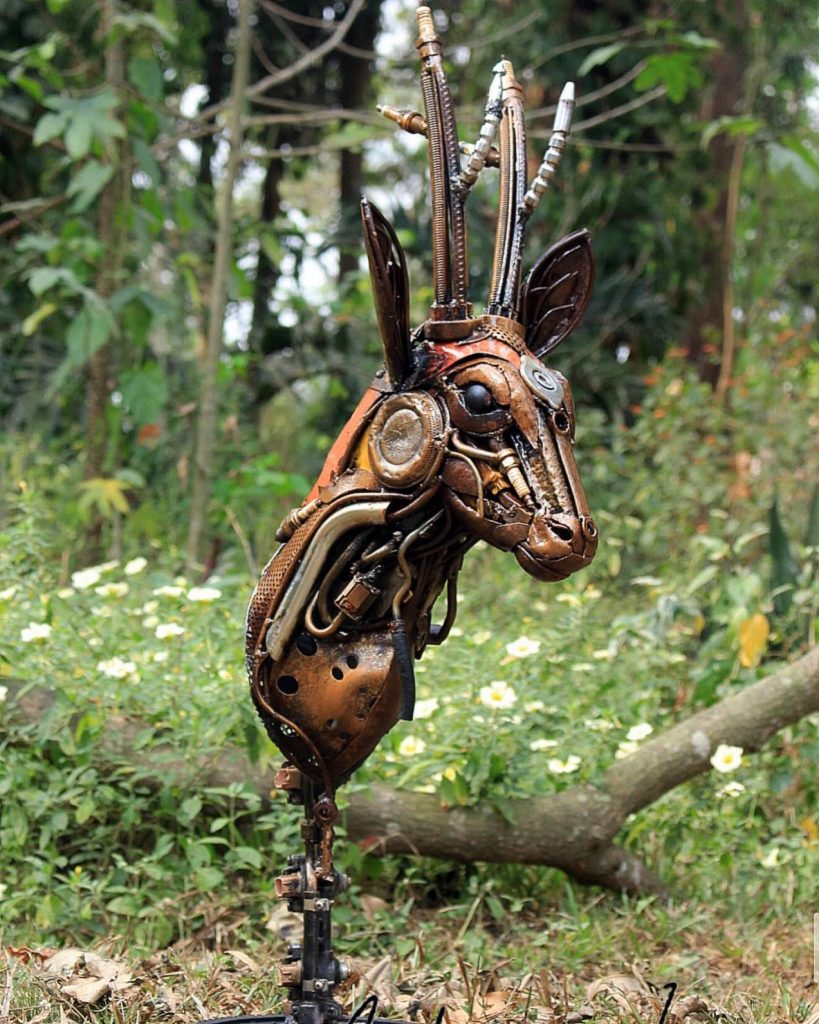
Nature also plays a significant role, particularly in his exploration of animals and movement. There is a constant dialogue between strength and fragility, between structure and flow.
Alongside these visual influences, there is also a deeper intellectual layer to his work. Literature, proverbs and wordplay shape how he thinks about meaning, encouraging him to embed layered narratives within each piece.
“I try to create works that reveal different interpretations the longer you engage with them,” he says.
At the core of it all is a philosophical interest in transformation. The idea that something discarded can be reshaped into something meaningful sits at the heart of his practice.
This evolution is visible in how his style has developed over time. Early experimentation has given way to a more refined and intentional approach, with a growing focus on balance, structure and the use of negative space.
“I now try to create forms that feel lighter and more dynamic, even though they’re made from steel,” he explains.
Recently, Ayoola reached a major milestone with his solo exhibition HEXIS: Before the Seventh, held in Derby and showcased at Banks Mill. The exhibition explored the idea of a threshold moment, a state where creation is complete but transformation has not yet begun.
“The work explored the sixth state of existence… a moment where potential is at its most concentrated,” he says. “A point just before transition, where form, energy and possibility coexist.”
It was a defining moment in his career, bringing together themes of transformation, material memory and the unseen narratives embedded within reclaimed metal.
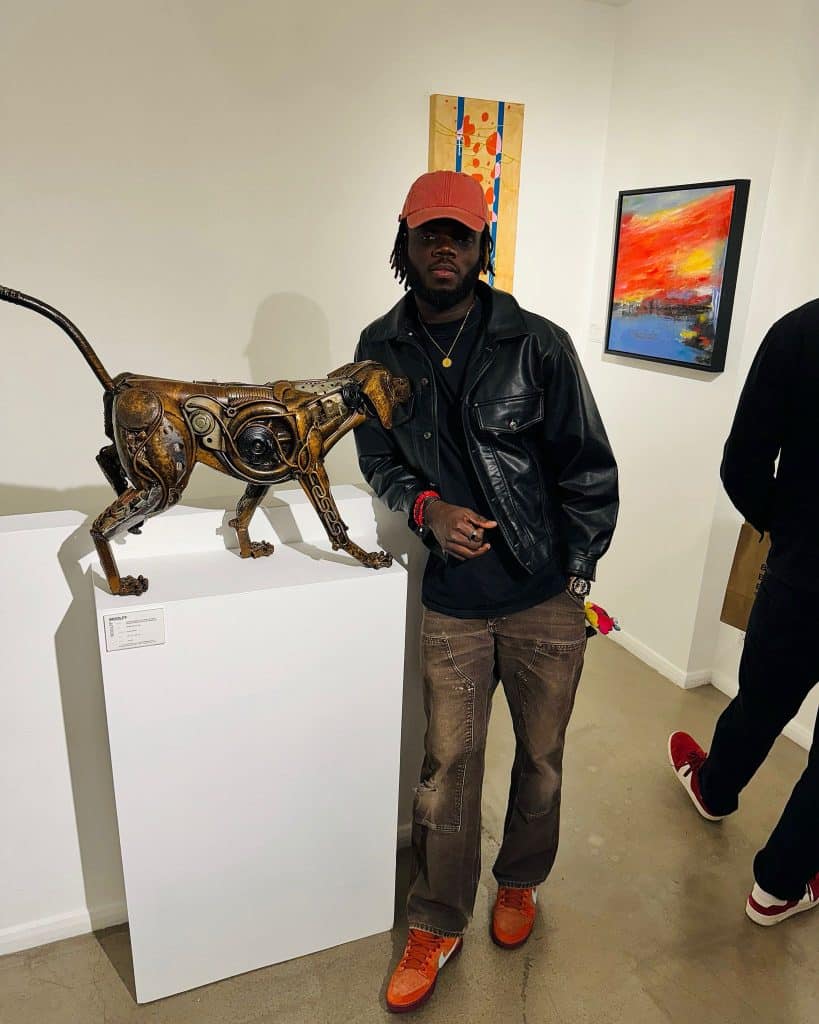
Now, his focus is shifting towards a new body of work centred on aviary wildlife sculptures. These pieces explore movement, interaction and the social behaviour of birds, translating those qualities into layered, textured steel forms.
“I am interested in observing their movement and presence, and translating those qualities into sculptural form,” he explains.
Looking ahead, there is also a clear ambition to scale up. Public sculpture remains a key goal, particularly work that can exist outdoors and interact with everyday environments.
“Public sculpture is particularly appealing because it allows the work to become part of people’s daily experience,” he says.
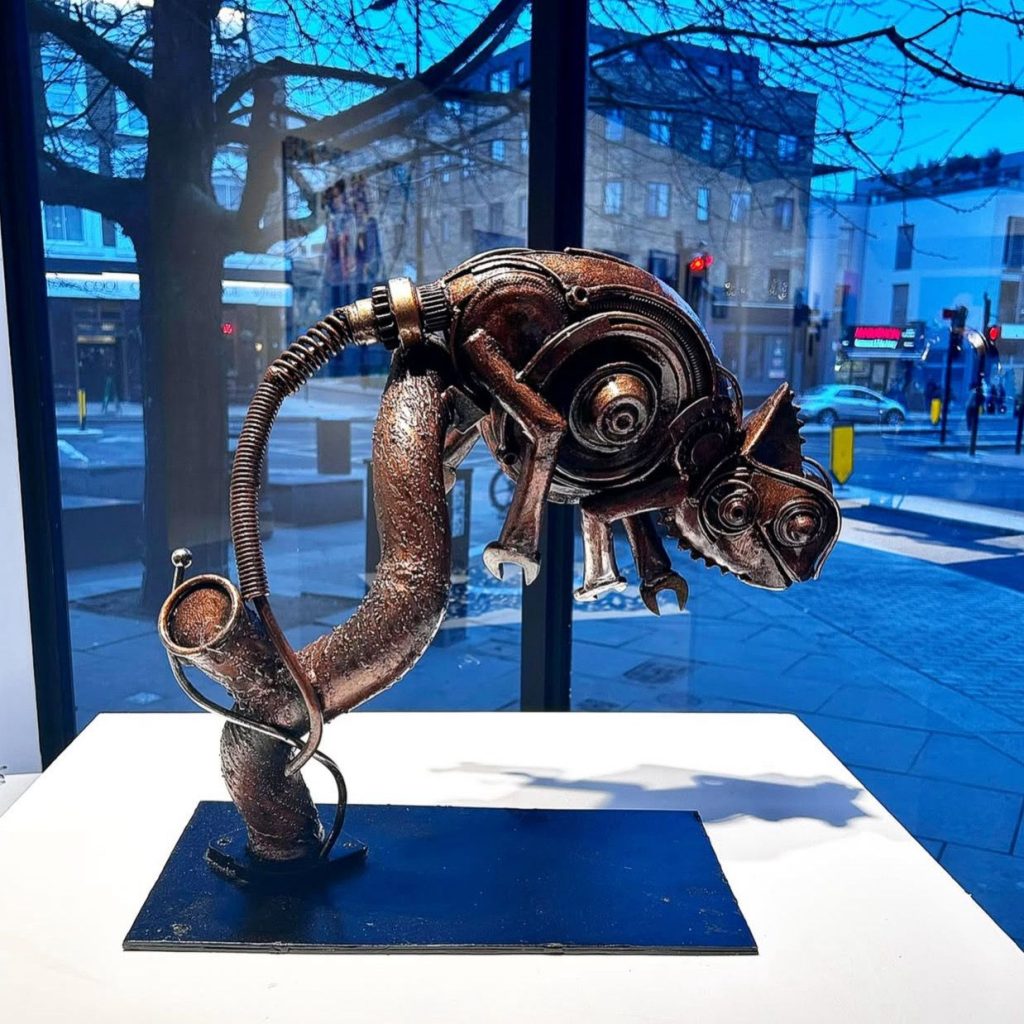
At its core, Ayoola’s work is about changing perception. It asks viewers to reconsider what they see, what they value, and what they might otherwise overlook.
“I hope that when people encounter my work they begin to see materials, especially discarded ones, in a different light,” he says. “By transforming them, I try to highlight the value that still exists within them.”
There is also an environmental thread running through his practice, a quiet but consistent advocacy for sustainability and more conscious interaction with materials.
Ultimately though, the impact he hopes to leave is emotional as much as intellectual.
“If someone pauses, reflects, and begins to look beyond the surface… then the piece has done what it was meant to do.”
Ayoola Ayodeji Kingsley is not just shaping metal. He is reshaping narratives, reworking history and reminding us that even in what we discard, there is still something worth holding onto.
For those wanting to explore more, his work can be followed online and experienced through exhibitions, including pieces currently shown at Woolff Gallery in London.
art-sceneartist-studiosarts-and-exhibitionslocal-artistspublic-art