There are loud bands, and then there are bands like Family of Addiction. The kind that don’t just play a…
By K Futur LOCALEvery July, the narrow cobbled streets of Pamplona fill with adrenaline, alcohol, television crews and thousands of people dressed in white and red. The Running of the Bulls, or Encierro, is sold to the world as a thrilling test of courage, an ancient Spanish tradition and a rite of passage for the brave. What is spoken about far less openly is that this is also a tradition with a documented death toll, hundreds of serious injuries every year, and a history that is far more chaotic, violent and controversial than its postcard image suggests.
The Pamplona Bull Run is not a harmless spectacle. People have died. People continue to be maimed. And the event persists, largely unchanged, in the modern age.
Origins: From Livestock Transport to Dangerous Spectacle
The origins of bull running in Pamplona stretch back to the 14th century, long before tourists, TV cameras or Hemingway. Bulls were transported from surrounding ranches into the city so they could be sold or used in bullfights. Herders guided the animals through the streets at speed, often running ahead to clear a path and protect themselves from the horns behind them.
By the 16th century, this practical task began to change. Young men, butchers and labourers started deliberately running in front of the bulls for bravado, competition and excitement. It became a public display of fearlessness rather than necessity. Crucially, this early form of the run existed separately from Pamplona’s main religious celebrations.
That changed in 1591–1592, when the city moved the San Fermín festival from October to July to coincide with the summer fair. With the festival relocated, the bull run was folded into the wider celebration. What had been a rough, dangerous practice suddenly became a centrepiece of a major civic event.
By the 18th century, the modern course through Pamplona’s old town was established. Authorities attempted to ban public participation as injuries and chaos increased, but enforcement failed. The run was already too popular, too ingrained and too profitable.
The Course and What Actually Happens
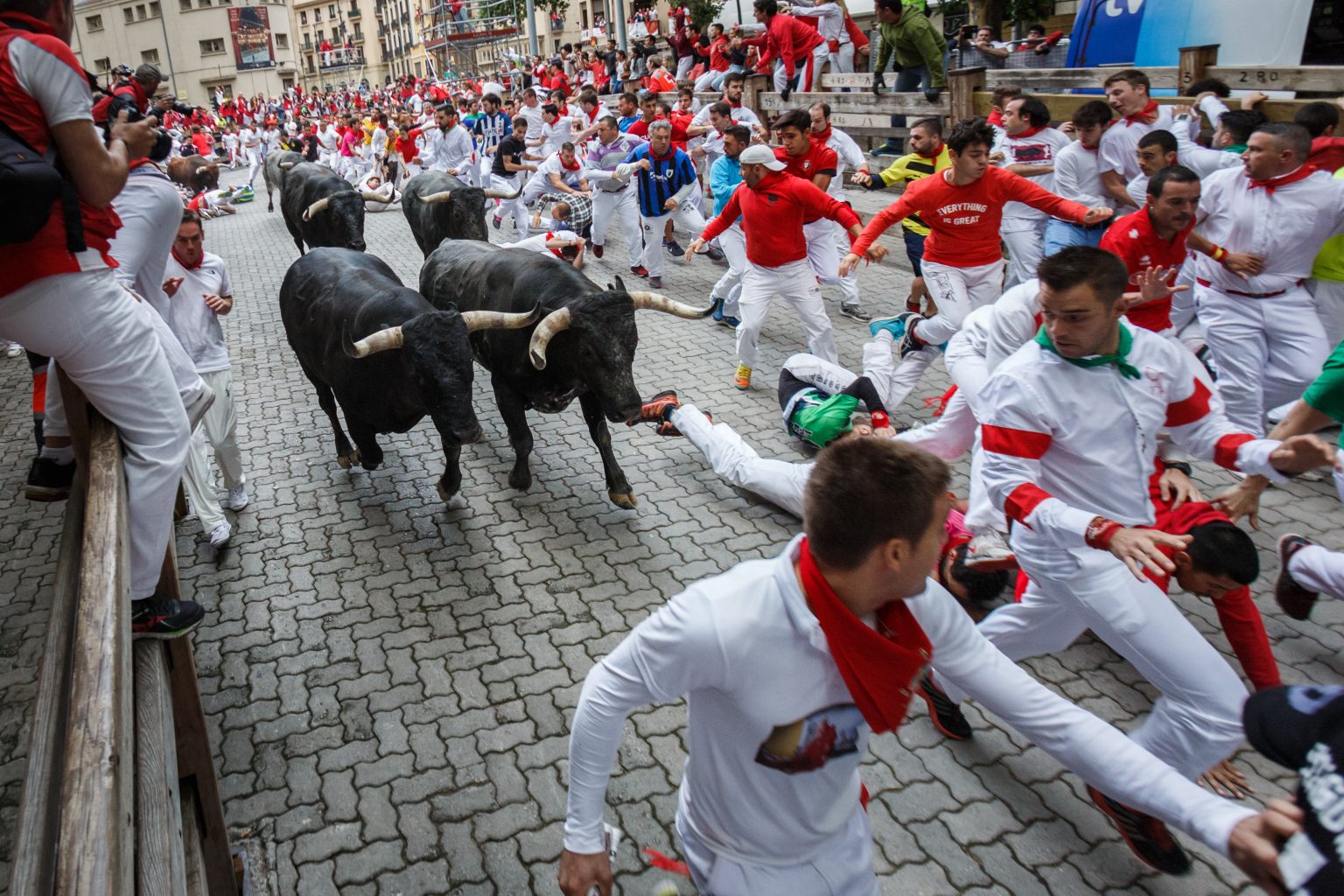
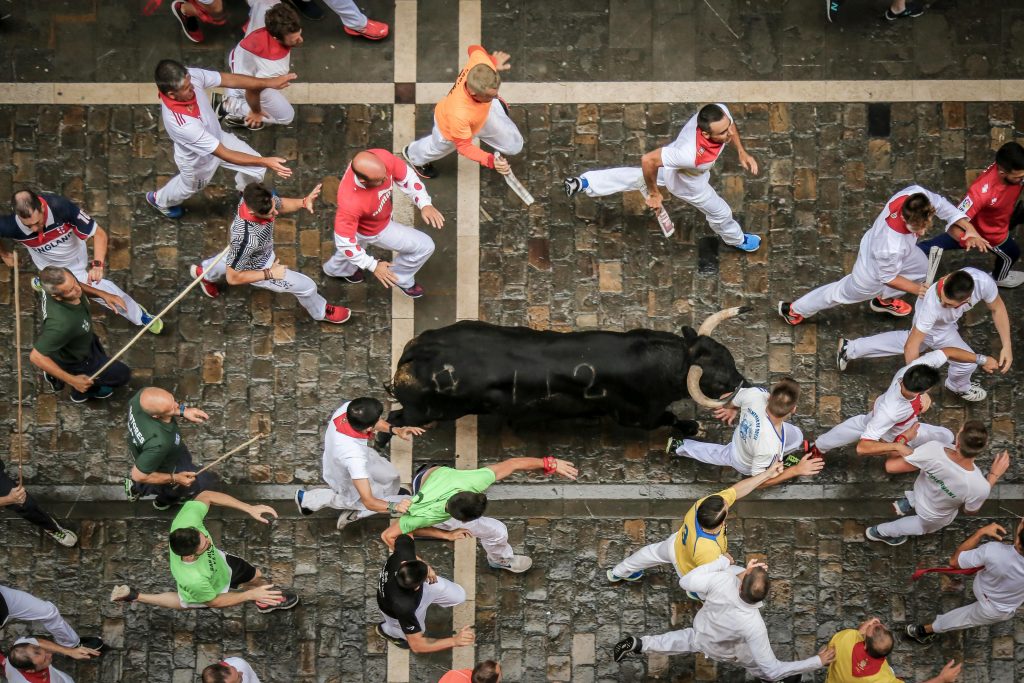
The Pamplona Encierro takes place over 875 metres, beginning at the Santo Domingo corral and ending inside the bullring. The run lasts only a few minutes, but during that time six fighting bulls, accompanied by steers, thunder through streets barely wider than a lorry.
Runners crowd in front, behind and alongside the animals. Many slip on cobblestones. Some fall underfoot. When pile-ups happen, suffocation becomes as real a danger as goring. Bulls can become separated from the pack, disoriented and aggressive, which is when fatal incidents are most likely.
Despite repeated warnings, runners regularly break basic safety rules: stopping to pose, touching the bulls, standing up after falling, or wearing inappropriate footwear. Every one of these actions has contributed to serious injuries and deaths.
Deaths in Pamplona: The Hard Numbers
Since official record-keeping began in 1910, 16 people have died during the Pamplona Bull Run. The most recent fatality occurred in 2009, but the nature of the deaths has remained consistent across generations.
Most fatalities are caused by goring, which is statistically rare but overwhelmingly fatal when it occurs. Horns puncture arteries, organs and the neck. One recorded death was caused by suffocation during a crowd crush.
All recorded deaths in Pamplona have been men, although women have been allowed to run since 1974. This does not reflect safety, but participation patterns.
The last man to die was Daniel Jimeno Romero, aged 27, from Madrid. On 10 July 2009, he was gored in the neck by a bull named Capuchino. The bull had become isolated from the pack, increasing its aggression. Jimeno died later that day in hospital.
The Worst Incidents in Pamplona’s History
Some deaths stand out due to their brutality, their visibility, or the way they revealed how quickly a “festival tradition” can turn into a public tragedy.
The deadliest run in Pamplona’s history occurred on 13 July 1980, often cited as the worst day because it remains the only time two people were killed in a single run. Vicente Risco (29) was gored in the chest and abdomen after being caught near the bullring entrance. José Antonio Sánchez Navascués (26) was gored in Town Hall Square by the same bull, which had become separated from the pack, making it more unpredictable and dangerous.
In 1995, Matthew Peter Tassio, a 22-year-old American, became one of the most high-profile victims. Ill-prepared and inexperienced, he stood up after falling, a critical violation of safety advice. A bull gored him in the abdomen, severing his aorta and slicing through his kidney and liver. He lost approximately 90 per cent of his blood and died within minutes of reaching hospital.
In 1977, José Joaquín Esparza, just 17 years old, died not from horns but from suffocation, crushed in a pile-up at the bullring entrance.
One of the most gruesome deaths occurred in 1947, when Casimiro Heredia was repeatedly tossed by a bull named Semillero. Eyewitness accounts describe his body being slammed against a wall again and again until he was dead.
Injuries: The Hidden Majority
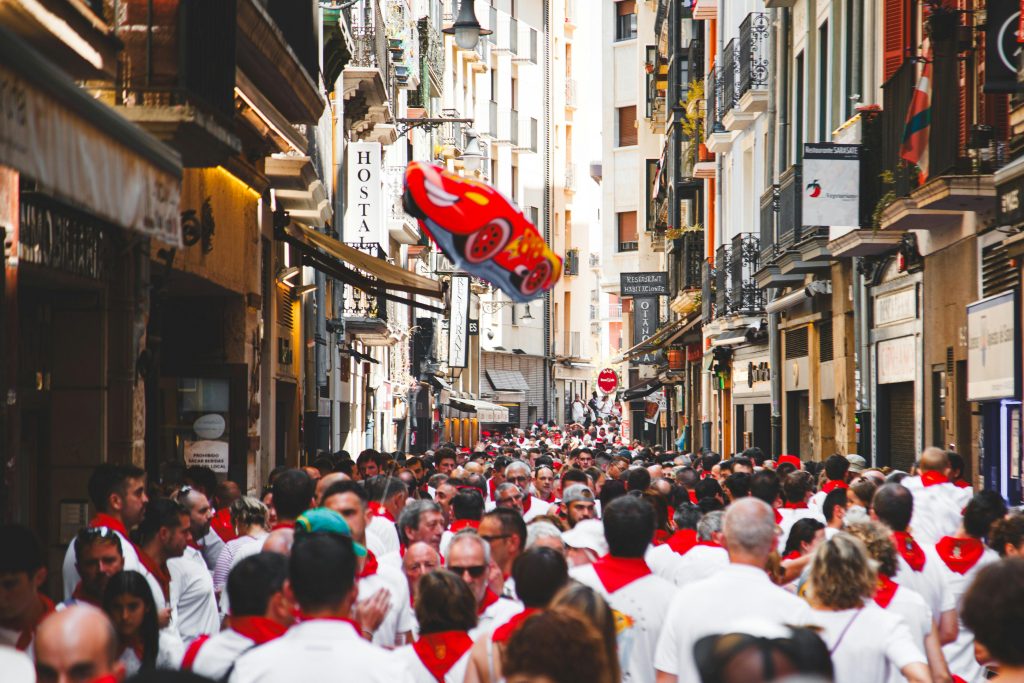
Deaths are rare, but injuries are not. Hundreds of people are injured every year at San Fermín. Broken bones, head injuries, deep puncture wounds and trampling injuries are routine. Both men and women are injured annually, including tourists with no prior experience of bull running.
Medical teams are stationed along the route, and hospitals prepare for the influx every morning of the festival. The danger is not theoretical. It is expected.
Bull Running Across Spain: More Deaths, Less Attention
Pamplona is only the most famous bull run. Across Spain, hundreds of smaller encierros take place every year, often with fewer safety controls and less international scrutiny. Fatalities are more frequent at these events.
In September 2023, a 61-year-old man died after being gored at a festival in Pobla de Farnals. In July 2022, three men died within 24 hours at separate bull-running events in the Valencia region. In October 2021, a 55-year-old man died after being repeatedly gored in the town of Onda.
These deaths rarely make international headlines, but they are part of the same tradition.
The Modern Spectacle: Televised Danger
Today, the Pamplona Bull Run is fully televised, livestreamed and replayed endlessly online. High-definition cameras capture every fall, every near-miss and every goring in slow motion. Safety briefings are issued, age limits enforced and alcohol officially discouraged, though reality often tells a different story.
Despite modernisation, the fundamental risk remains unchanged. The bulls still run. People still fall. Horns still kill.
The Animals: Fear, Injury and Death
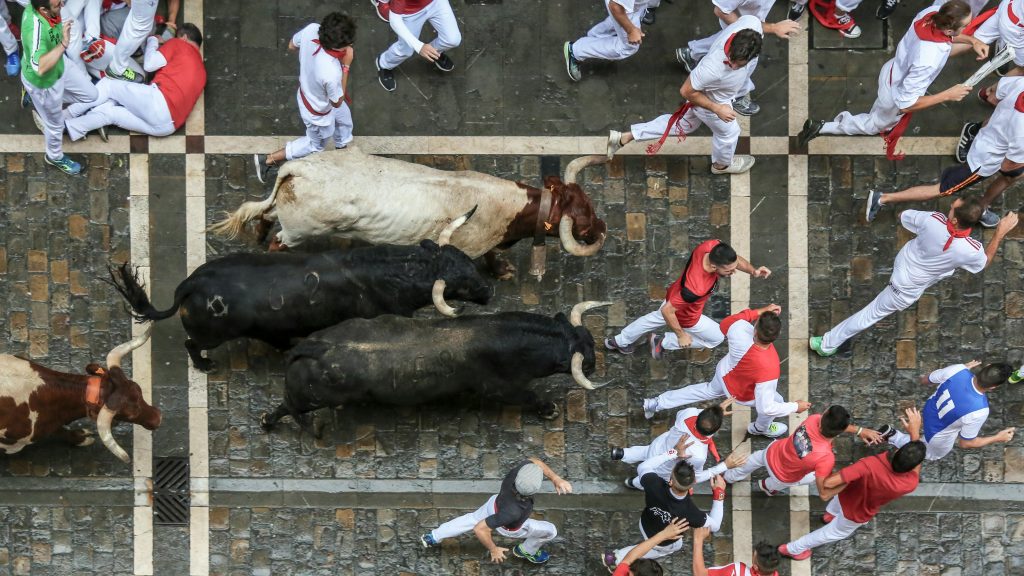
Animal rights organisations argue that the cruelty is inseparable from the event itself. Bulls are herd animals forced into panic, chased through unfamiliar streets while being shouted at, struck and surrounded. They slip, collide with walls and barriers, and sustain injuries before the run even ends.
Most controversially, every bull used in the morning run is killed later the same day in the bullring. Many tourists are unaware of this. The bullfight that follows involves repeated stabbing with lances and barbed harpoons before a final sword strike that is often far from instantaneous.
Public opposition to bullfighting has grown sharply. Polls show that a majority of Spanish citizens now oppose the practice, and more than 125 towns and cities have declared themselves anti-bullfighting. Groups such as PETA and World Animal Protection protest the festival every year.
Supporters argue that the run is an integral cultural tradition, centuries old, and that the bull is honoured as a worthy adversary. Critics counter that tradition does not justify preventable suffering and death.
A Tradition That Refuses to Die
The Running of the Bulls is often framed as daring, romantic or rebellious. The reality is starker. Since 1910, at least 16 men have died in Pamplona alone. Hundreds are injured every year. Bulls are panicked, injured and ultimately killed. Fatalities continue across Spain annually.
It is a tradition rooted in the past, sustained by tourism, adrenaline and spectacle. And despite everything we now know, despite modern medicine, broadcasting, protests and public debate, people still step into the street each July and run straight towards death.
It is, by any measure, mad.
cultural-eventsfestivals-and-eventsinternet-historysporting-eventssports-culture