
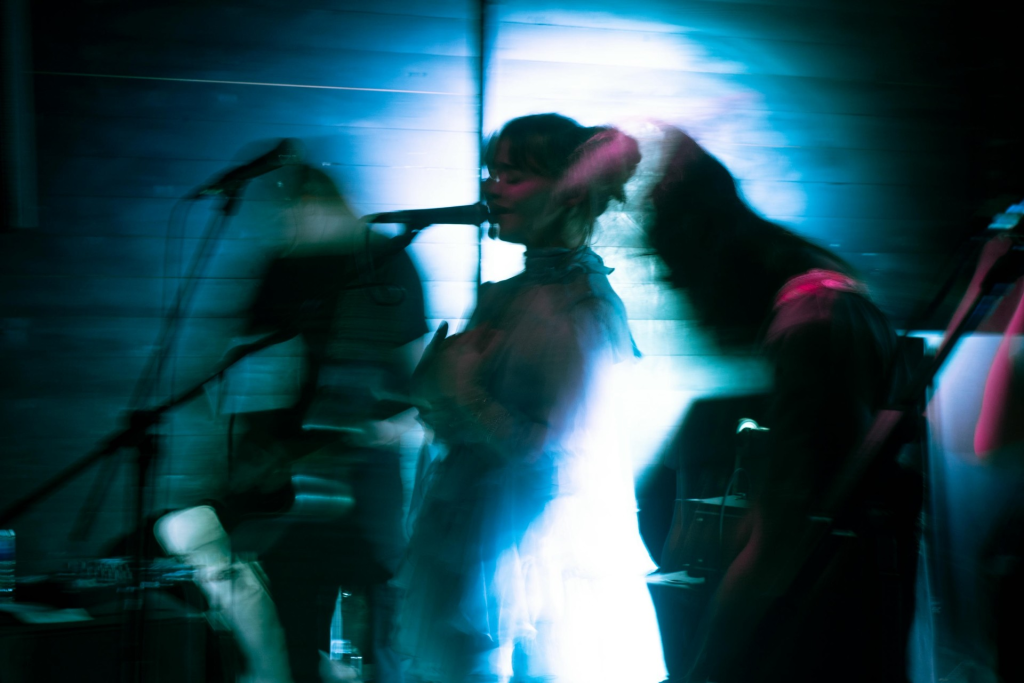
When we caught Fatal Reflection at FUSE at Derby’s Victoria Inn, the Nottingham six-piece had a packed room for their…
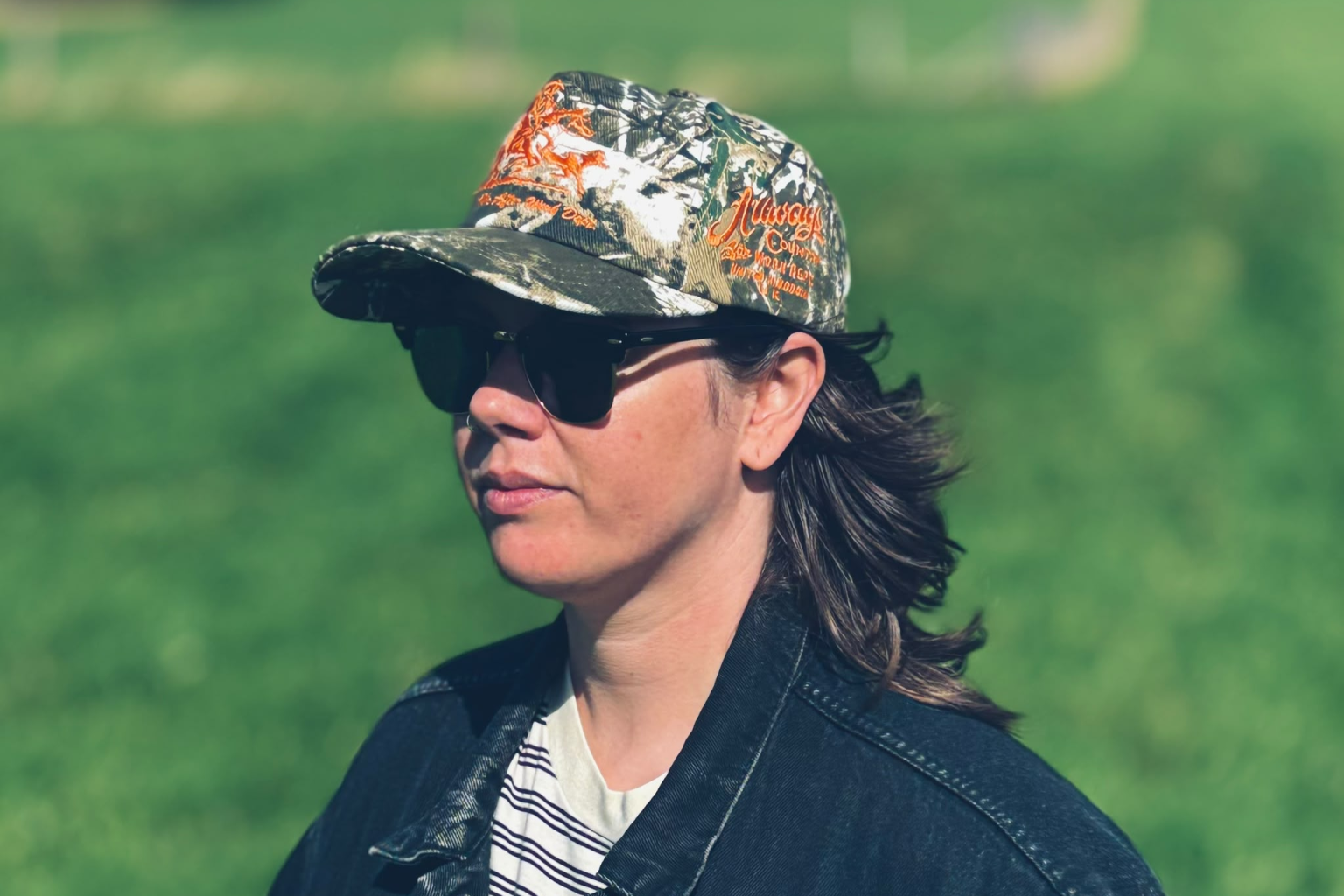
By K Futur BANDWIDTHEm Claire has spent years encouraging other people to be creative. As an English teacher, that comes with the job. Giving herself permission to call herself an artist took a little longer.
Working as Em Claire Creative in Derby, she brings together mixed-media art, poetry and memoir. Paint, charcoal, collage and handwritten text give her different ways to explore memory, queer identity and what it’s like to live with chronic illness. She’s drawn to the ordinary details that often get left out of those stories, including the moments that are funny enough to get you through a difficult day.
We caught up with Em to talk about how Derby has shaped her work, what she can express through images when words only get her so far, and why she thinks you should keep the artwork you’re tempted to throw away.
Where are you currently based, and how has that place shaped your work?
I’m based in Derby, where I’m developing my mixed-media art and writing practice. I’ve been building connections with the local arts community, including Banks Mill Studios and Artcore, and exploring opportunities to develop my work professionally.
Derby has an interesting mixture of industrial heritage, independent creativity and everyday community life. I’m particularly interested in ordinary people’s stories, the places we inhabit and the experiences that shape our identities.
How would you describe what you do, and what drew you to this art form in the first place?
I’m a mixed-media artist, poet and writer. My work explores identity, memory, chronic illness, queer experiences and the complicated business of being human.
I experiment with acrylic paint, collage, charcoal, texture, typography and poetry. I’m particularly drawn to combining visual art with language, allowing images and words to tell stories together.
I’ve always been a writer, but visual art has become another way to explore things that aren’t always easy to put into words.
Can you share a standout moment or highlight in your creative journey so far?
There have been several significant moments this year.
I was selected by Shape Arts for Chapter and Verse, an opportunity to develop my book, Sick Note, a memoir about living with chronic illness, particularly Fowler’s syndrome.
The book explores the relationship between illness and everyday life. It’s about navigating relationships, medical appointments, work, identity and the mundane, utterly normal experiences that continue happening regardless of what’s going on with your health.
I’m interested in the absurdity of trying to live an ordinary life when your body seems determined to make everything unnecessarily complicated. There’s a lot of dark humour in the book because sometimes the alternative is to scream.
I was also selected for The Literary Consultancy’s LGBTQ+ Free Reads programme, which provided an opportunity to receive professional feedback on my writing.
Another enormous milestone was receiving Developing Your Creative Practice funding from Arts Council England. This is supporting a year of artistic development through mentoring, studio practice and training.
These opportunities have helped me take my identity as both an artist and a writer more seriously.
What’s been the most challenging part of your journey as an artist?
Managing chronic illness alongside work, relationships and trying to establish a creative practice has been difficult.
Living with Fowler’s syndrome has involved hospital appointments, surgery and periods when my health has been unpredictable. It can be frustrating having ideas and ambitions but not always having the physical capacity to pursue them.
I’ve also had to challenge my own assumptions about what an artist should look like or how someone becomes one.
I’m an English teacher and have spent years encouraging other people to be creative. Giving myself permission to invest in my own practice has taken considerably longer.
Who or what inspires your work, creatively, emotionally or philosophically?
I’m inspired by everyday experiences, personal memories, queer culture, conversations and the stories people don’t always feel comfortable sharing.
I’m interested in how the body becomes part of our identity, particularly when something goes wrong with it.
Medical imagery, handwritten documents, hospital experiences and personal archives increasingly influence my visual practice.
I also love expressive colour, bold marks and experimenting with different textures. Sometimes the inspiration is deeply personal. Other times I just discover a material I haven’t used before and want to see what I can do with it.
How has your style or approach evolved over time?
My creative practice began primarily with writing, particularly poetry, but I’ve gradually moved towards combining language with mixed-media artwork.
I’ve become more interested in abstraction, layering, collage and experimenting with different surfaces.
I’m also learning to embrace the unpredictable nature of making art. Not everything works, and some experiments are genuinely terrible, but those moments often lead somewhere unexpected.
I’m currently exploring how visual art can communicate experiences that are difficult to explain through conventional language.
What are you currently working on, and what’s coming up next?
I’m currently developing several interconnected projects.
My memoir, Sick Note, is a major focus. It examines living with Fowler’s syndrome and chronic illness while continuing to navigate relationships, employment, marriage, travel and the ordinary experiences that make up everyday life.
It isn’t intended to be a conventional inspirational illness memoir. I’m much more interested in the uncomfortable, funny and occasionally ridiculous reality of being unwell while everything around you carries on as normal.
Alongside the book, I’m developing a body of mixed-media artwork titled More Than Just a Hospital Number. This explores medical identity, invisible disability and the experience of being viewed through clinical records rather than as a whole person.
Through my Arts Council England funding, I’m developing new skills in mixed media, ceramics, printmaking and other experimental techniques.
I’m also expanding Art as a Story, my creative wellbeing practice, which brings together visual art and creative writing through accessible workshops for adults.
What do you hope people feel or take away when they experience your work?
I’d like people to recognise something of themselves in it.
Whether the work explores illness, identity, relationships or an ordinary moment, I want it to feel human and authentic.
I’m particularly interested in challenging assumptions about disability and chronic illness. People are much more than their diagnoses, and their lives don’t suddenly stop being interesting, funny or complicated because they’re unwell.
I don’t think art needs to provide answers. Sometimes it’s enough for somebody to feel understood or to see an experience represented in a way they haven’t encountered before.
Where can people find, follow or experience more of your work?
You can follow my creative practice through Em Claire Creative, where I share mixed-media artwork, creative writing, experimental projects and behind-the-scenes developments.
My Instagram includes work in progress, finished artwork and updates about my writing and creative projects.
Website: emclairecreative.co.uk
Instagram: @emclairecreative
I’m continuing to develop my portfolio and hope to share more exhibitions, workshops and creative opportunities over the coming year.
If you could give one piece of advice to fellow or aspiring artists, what would it be?
Don’t wait for somebody else to give you permission to call yourself an artist.
It’s easy to assume that everybody else knows what they’re doing and that you’re somehow behind. I’ve certainly spent enough time thinking that.
Make things, experiment and allow yourself to create work that doesn’t necessarily turn out how you imagined.
You don’t have to follow a conventional route into the arts, and you don’t need to have everything figured out before you begin.
Some of the best things I’ve made have started as experiments without any particular expectations.
And keep the terrible artwork. It’s useful evidence that you’re actually trying something.
Explore Em Claire’s mixed-media art, poetry and creative writing through Em Claire Creative. Website · Instagram · TikTok
creative spaces derbyderby artistsderby creativesgrassroots derbylocal talent derby